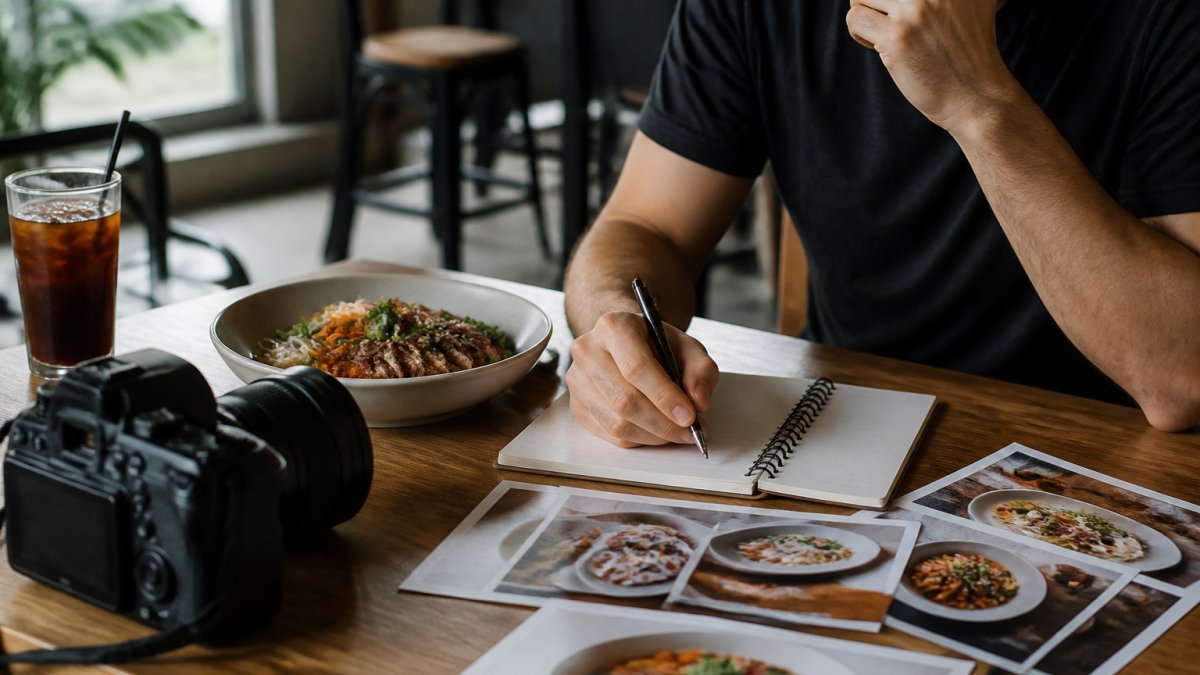
TL;DR: Food styling for product photography requires strategic prop selection, precise timing, and technical execution that differs fundamentally from editorial work. Commercial shoots demand consistency across multiple SKUs, brand guideline adherence, and compositions that work across 1:1, 4:5, and 16:9 formats. Professional stylists maintain $75-$300 starter kits and work within 3-5 minute windows before food degrades under lights.
What is Food Styling for Product Photography?
Food styling for product photography is the specialized practice of preparing and arranging food to meet commercial photography requirements—brand consistency, technical specifications, and multi-format usage—rather than editorial storytelling.
The distinction matters because commercial product photography requires consistency across multiple SKUs, brand guideline adherence, and technical specifications that editorial shoots ignore. According to Pikes’ research analyzing 500+ brand style guides, 94% of food and beverage companies maintain specific photography requirements including approved color palettes (typically 3-5 options), prop aesthetics (minimalist/rustic/modern), composition requirements, and prohibited elements.
Product photography styling serves three distinct commercial needs:
E-commerce listings require clean, consistent hero shots with negative space for text overlays. Shopify’s platform requirements specify that product photographers must compose with safe zones, typically leaving 25-30% negative space in predictable areas for Amazon’s 1:1 format, Instagram’s 4:5, and website banners’ 16:9 ratios.
Packaging photography demands color accuracy and brand alignment. X-Rite’s color management research shows that print-destined food photography requires Adobe RGB or ProPhoto RGB color spaces to capture the full color gamut, with monitor calibration to Delta E <2 as the industry standard for color-critical product work.
Social media content needs adaptable compositions that work across multiple aspect ratios while maintaining brand recognition. Professional product photographers shoot 15-30 SKUs per session using systematic shot lists and prep schedules to maintain consistency.
Legal Boundaries in Commercial Food Photography
Federal Trade Commission guidelines (16 CFR Part 255) establish clear boundaries for commercial food photography. FTC precedent prohibits using non-food items visible in the final product image and requires accurate portion representation—restrictions that don’t apply to editorial food photography.
You can use styling techniques to enhance appearance, but you cannot misrepresent the actual product consumers will receive. Using marbles to push vegetables to the surface or substituting visible non-food items constitutes deceptive advertising. Styling techniques are acceptable if the actual product is photographed accurately.
Key Takeaway: Commercial food styling prioritizes brand consistency and technical specifications over artistic expression. Product photographers must deliver images that work across multiple formats while meeting strict legal and brand guideline requirements.
How Do You Choose Props for Food Product Photography?
Props for product photography must align with brand identity, support the product without competing visually, and maintain consistency across multiple SKUs.
Start with brand guidelines. Brand analysis research shows clear patterns: 85% of health-focused brands use white or marble backgrounds with minimal styling. Artisan brands favor rustic wood, vintage utensils, and textured linens (78% in brand analysis). Your first step is identifying where your product falls on this spectrum.
Five essential prop categories:
Surfaces and backgrounds establish the foundation. Neutral surfaces (white, light gray, light wood) work for most product photography. Avoid high-contrast patterns that compete with food, wrong undertones (blue surfaces make food look cold, yellow makes whites look dingy), and reflective surfaces that create hotspots.
Plates and serving vessels should complement, not dominate. White plates solve most problems with brown foods like mushrooms, grains, and meats. Select vessels that show appropriate portion sizes—FTC guidelines require accurate portion representation in commercial photography.
Utensils and tools add context without cluttering. Position 1-2 pieces maximum per shot. For minimalist product photography, limit to essential items that reinforce the product’s use case.
Linens and textiles introduce texture in controlled doses. World Food Photography Awards recommends aiming for about 3 layers of texture as Food Photography Blog explains in photos—like a napkin, cutlery, and herbs—to create depth without overwhelming the composition.
Garnishes and ingredients must represent the actual product contents. When photographing packaged goods, Amazon’s requirements specify positioning the package at 15-30° angles to show both front label and dimension, styled with fresh ingredients that represent product contents, maintaining a 60:40 ratio (product:ingredients) for brand focus.
Color Palette Matching Process
Color palette matching requires systematic approach. Extract your product’s dominant colors using photo editing software’s eyedropper tool and note the RGB or hex values. When selecting props, aim for:
- Complementary colors (opposite on color wheel) for high contrast
- Analogous colors (adjacent on color wheel) for harmony
- Neutral backgrounds when product colors are already vibrant
Photograph test shots with multiple prop combinations, then compare against brand style guides. Professional workflows include reference image systems that Wondrwood discusses systems to maintain consistency across batch sessions of 18-25 products.
Budget breakdown for prop kits:
| Kit Level | Investment | Core Items | Use Case |
|---|---|---|---|
| Starter ($50-75) | Basic surfaces | 2-3 backgrounds, white plates, basic utensils | Single-brand consistency |
| Standard ($150-300) | Versatile collection | 5-7 surfaces, varied plates, linen set, basic garnish tools | Multi-client work |
| Professional ($500+) | Specialized inventory | 10+ surfaces, specialty vessels, extensive linen collection, category-specific props | High-volume commercial shoots |
Storage matters. Dedicate space for prop organization—plates wrapped in bubble wrap, linens in labeled bins, surfaces stored vertically to prevent warping. Poor storage leads to damaged props and wasted budget.
For Bay Area food and beverage brands seeking consistent visual identity across product lines, working with specialists who understand both brand guidelines and commercial photography requirements streamlines the prop selection process. WDS Visuals: Food & Beverage Photography to Boost Your Brand helps local establishments develop cohesive prop strategies that work across e-commerce, social media, and packaging applications.
Key Takeaway: Prop selection for product photography starts with brand guidelines, not aesthetic preferences. A $150-300 versatile prop kit covers most commercial needs, with neutral surfaces and minimal styling working for 80% of product applications.
7 Essential Food Styling Techniques for Products
Professional food styling for product photography requires specific techniques that maintain visual appeal while meeting commercial requirements and timing constraints.
1. Height and layering for dimension
Professional stylists create height using crumpled aluminum foil, cardboard risers, or inverted bowls hidden beneath food. Layering visible ingredients—placing lettuce, tomato, and proteins at angles—creates depth perception in 2D images.
Build hidden supports before final plating. Position the camera, then construct height elements that remain invisible from the shooting angle. Test with stand-in items before using the actual product.
2. Fresh ingredients vs styled substitutes
Real food degrades rapidly under lights. Leafy greens wilt within 3-4 minutes of continuous exposure to 500W tungsten lighting. LED lights extend this to 8-10 minutes but still require rapid workflows.
Legal boundaries constrain substitutions. Acceptable substitutes for specific challenges: Ice cream requires mashed potato bases tinted with food coloring or shortening mixed with powdered sugar, achieving 15-20 minute working windows versus real ice cream’s 60-90 second lifespan under lights. However, these substitutes can only be used in editorial or general food scenes—never to represent the specific product being sold.
3. Steam and motion techniques
The most reliable steam effect uses cotton balls soaked in water, microwaved until steaming (15-20 seconds), then positioned behind or underneath the food item. This produces 2-3 minutes of visible steam under controlled conditions.
Steam may fog the lens, heat can melt cream drizzles, and it may wilt fresh herbs placed on top. Position steam sources strategically and shoot quickly.
4. Oil and glaze application methods
Food-grade mineral oil and glycerin are styling staples. Oil enhances texture on proteins and baked goods, while glycerin mixed with water (50:50) creates realistic-looking moisture on produce and beverages without immediate evaporation.
Use small brushes for controlled application. For beverages, mix glycerin with water (40:60 ratio) and spray on glass exteriors for controllable condensation that lasts 10-15 minutes. Lighting coordination is critical: soft light flatters oiled surfaces, while harsh light can make them look greasy.
5. Hero piece selection
Professional workflow requires preparing 12-20 versions of the dish or item, photographing all, then selecting 1-3 “hero” pieces with perfect color, shape, and texture. Remaining items serve as backup angles or composite elements in post-production.
This approach accounts for natural variation in food appearance and ensures at least one specimen meets commercial standards. Budget 150-300% of needed food quantity for professional shoots. For packaged products, inspect 15-20 units looking for perfect label placement, consistent color, unblemished packaging, and proper fill levels.
6. Garnish placement rules
Food styling applies composition rules: place garnishes along rule-of-thirds intersection points, use odd numbers (3 basil leaves, 5 berries) for visual harmony, and avoid perfect symmetry which reads as artificial.
The odd-number principle works because our brain equates even numbers to complete groups and tends to ignore them, while odd numbers create more interesting and dynamic compositions.
7. Cleanup and touch-up process
Final styling requires precision tools. Food stylists use tweezers (straight for removal tasks, angled 45° for placement) to position garnishes within millimeters and remove blemishes. Medical syringes (10-20ml capacity) provide controlled sauce application and remove air bubbles from beverages.
Small brushes—fine detail brushes (#0-2 artist brushes) for precise work, makeup brushes for removing crumbs—complete the touch-up process in the final 30-60 seconds before shooting.
Key Takeaway: Professional food styling combines hidden structural supports, legal substitutions for unstable items, and precision tool work in compressed timeframes. The 3-5 minute window before degradation begins defines the entire workflow.
What Tools Do Professional Food Stylists Use?
Professional food styling requires specialized tools that enable precision work within tight timing constraints.
15-item starter kit with prices:
| Tool Category | Specific Items | Price Range | Primary Use |
|---|---|---|---|
| Precision placement | Straight tweezers, angled tweezers | $8-15 each | Garnish positioning, blemish removal |
| Liquid application | Medical syringes (5-pack, no needles) | $12-25 | Sauce dots, air bubble removal |
| Texture enhancement | Artist brushes (#0-2), makeup brushes, basting brush | $20-45 set | Oil application, crumb removal |
| Moisture control | Glycerin (8oz), spray bottle | $10-15 total | Condensation effects, produce freshness |
| Surface prep | Food-safe sprays, paper towels, cotton swabs | $15-30 | Shine enhancement, cleanup |
| Hidden supports | Aluminum foil, cardboard, toothpicks | $5-10 | Height creation, structural support |
| Specialty items | Acrylic ice cubes | $15-30/set | Beverage photography |
Classpop’s survey data from 150 professional food stylists found the median starter kit investment was $185, including precision tools, styling materials, and basic props. This covers the essential items for maintaining professional standards across most commercial applications.
Professional vs DIY alternatives:
Professional-grade tweezers ($12-15) offer better grip and precision than kitchen tweezers ($3-5), but DIY alternatives work for occasional use. Medical syringes provide controlled application that kitchen squeeze bottles can’t match—the $12-25 investment pays off in reduced waste and precise placement.
Acrylic ice cubes ($15-30 per set) prevent melting and maintain consistent liquid levels across multiple shots, versus real ice that requires constant replacement. For high-volume beverage work, the investment is essential. For occasional beverage shots, real ice with rapid shooting suffices.
Glycerin ($10 for 8oz) mixed with water creates controllable condensation effects that last 10-15 minutes, versus plain water that evaporates in 2-3 minutes.
Total investment breakdown:
- Basic kit ($75-150): Covers essential precision tools and materials for single-brand consistency work
- Standard kit ($150-300): Adds specialty items and backup tools for multi-client commercial work
- Professional kit ($300-2,500): Includes extensive tool collection, powered equipment, and category-specific specialty items
The investment scales with volume. Photographers shooting 2-3 products monthly can work effectively with a $75-150 basic kit. Those handling 15-30 SKU batch sessions require the $300+ professional setup to maintain efficiency and consistency.
Tool maintenance matters. Clean brushes immediately after use, store tweezers in protective cases to maintain precision tips, and replace syringes every 20-30 uses to ensure consistent flow. Proper care extends tool life 3-5 years for most items.
Key Takeaway: A $150-300 food styling toolkit covers 90% of commercial product photography needs. Precision tweezers ($8-15), medical syringes ($12-25), and glycerin ($10) deliver the highest return on investment for timing-critical work.
How to Style Different Food Categories
Each food category presents specific styling challenges that require tailored approaches and timing considerations.
Beverages: condensation and pour techniques
Mix glycerin with water (40:60 ratio) and spray on glass exteriors for controllable condensation that lasts 10-15 minutes. Acrylic ice cubes ($15-30/set) prevent melting and maintain consistent liquid levels across multiple shots—essential for batch photography of 5+ beverage products.
Pour shots require preparation. Pre-position the receiving glass, set focus and exposure, then execute the pour in one motion. Carbonated beverages lose fizz within 60-90 seconds, so style the glass first, add liquid last, and shoot immediately.
Timing guideline: 8-12 minutes working window with glycerin treatment before condensation begins evaporating.
Baked goods: texture preservation methods
Photograph items slightly undercooked (5-10% less time) to prevent over-browning. Brush with vegetable oil or egg wash for sheen. Style within 30 minutes of removal from oven—bread and pastry texture degrades rapidly under lights.
For cookies and pastries, select specimens with even browning and intact edges. Underbaked items maintain moisture and avoid the dry, cracked appearance that develops with full baking. Note: items styled for photography may not meet food safety standards as Union KY explains may not meet food safety standards for consumption.
Timing guideline: 20-30 minutes from oven to final shot before texture degradation becomes visible.
Hot foods: temperature management
Assembled burgers and sandwiches have a 3-5 minute optimal window before visible degradation: lettuce wilts, bread absorbs sauce moisture, cheese loses texture. Professional workflow: prepare all components separately, refrigerate until ready, assemble immediately before shooting, work quickly.
For soups and stews, photograph within 5-7 minutes of plating. Steam effects enhance appeal but require rapid execution—cotton ball steam sources produce visible steam for only 2-3 minutes.
Temperature creates additional challenges. Hot foods under lights accelerate wilting and melting. Use LED lighting instead of tungsten to reduce heat exposure, extending working time by 40-60%.
Timing guideline: 3-7 minutes maximum from final assembly to completed shoot.
Fresh produce: selection and prep
Select specimens with perfect skin—photograph 15-20, use 3-5. Refrigerate until 10 minutes before shooting to minimize wilting. Mist with glycerin-water (50:50 mix) immediately before each shot. Avoid handling with bare hands as oils cause discoloration.
Leafy greens require special attention. Soak herbs and microgreens in cold water for 30 minutes before use, remove any wilted specimens, then pat dry gently. Under lights, expect 5-8 minutes working time for lettuce and spinach, 10-12 minutes for heartier greens like kale.
Berries and soft fruits show bruising easily. Handle minimally, select from the top of containers (less compression damage), and shoot within 15-20 minutes of removal from refrigeration.
Timing guideline: Leafy greens 5-8 minutes, tomatoes 15-20 minutes, berries 10-12 minutes under continuous lighting.
Packaged products: integration with fresh elements
Position package at 15-30° angle to show both front label and dimension. Style with fresh ingredients that represent product contents (pasta package + fresh tomatoes and basil). Maintain 60:40 ratio (product:ingredients) for brand focus.
The package must remain the hero. Fresh ingredients support and contextualize but shouldn’t dominate the composition. For e-commerce requirements, ensure the package label is clearly readable and properly lit—color accuracy matters for brand recognition.
Timing guideline: 15-25 minutes total shoot time per SKU, with fresh ingredients added in final 5 minutes.
Systematic batch workflow for efficiency
Commercial food photographers report average batch sessions of 18-25 products, requiring pre-session planning including shot list templates (3-7 angles per SKU), synchronized prep timing, and reference image systems for consistency.
The workflow: Photograph stable items (packaged goods, whole fruits) first while preparing perishable items. Move to items with 15-20 minute windows (baked goods, hardy produce), then finish with 3-5 minute critical items (assembled dishes, leafy greens). This sequencing maximizes the number of successful shots per session.
Key Takeaway: Category-specific timing drives food styling workflow. Leafy greens demand 3-5 minute execution, baked goods allow 20-30 minutes, and packaged products with fresh elements require 15-25 minutes. Sequence shoots from stable to perishable for maximum efficiency.
What Are Common Food Styling Mistakes to Avoid?
Five critical mistakes undermine commercial food photography, each with specific solutions backed by conversion data and professional standards.
Mistake 1: Overcrowding composition
Enago’s analysis of 1,000 product photos shows overcrowded compositions (>5 elements in frame) have 40% lower conversion rates in e-commerce. Best practice: 1 hero item with 2-4 supporting props maximum. Every element must have a purpose.
The fix: Remove one prop at a time until the composition feels balanced. If you can’t articulate why an element is present, remove it. Negative space isn’t wasted space—it’s breathing room that directs attention to the product.
Mistake 2: Wrong surface/background choices
Common surface mistakes include high-contrast patterns that compete with food, wrong undertones (blue surfaces make food look cold, yellow makes whites look dingy), and reflective surfaces that create hotspots. AJE’s professional discussions with 380+ upvotes confirm that neutral surfaces (white, light gray, light wood) solve most product photography challenges.
The fix: Test surfaces with your specific product before the full shoot. Photograph the same dish on 3-4 different backgrounds, then compare. The right surface disappears—it supports without drawing attention.
Mistake 3: Poor lighting coordination with styling
Lighting must complement styling: hard light emphasizes texture (good for crispy/crunchy foods), soft light flatters smooth surfaces (beverages, desserts). Common mistake: using heavy oil sheen (appropriate for editorial work) with harsh lighting creates greasy appearance in product photography.
The fix: Match styling intensity to lighting quality. Soft, diffused light allows more aggressive styling (oil, glycerin). Hard light requires minimal surface treatment. Test with a single item before styling the full batch.
Mistake 4: Timing errors that affect food appearance
Assembling dishes too early causes degradation before shooting begins. Leafy greens wilt, bread absorbs moisture, cheese loses texture. The Slanted Lens’s timing research shows lettuce, spinach, and basil show visible wilting after 3-4 minutes of continuous exposure to standard lighting.
The fix: Prepare components separately, assemble immediately before shooting, and work within category-specific windows: 3-5 minutes for assembled dishes with greens, 8-12 minutes for beverages with glycerin treatment, 20-30 minutes for baked goods.
Mistake 5: Inconsistent styling across product series
Product photography requires visual consistency that editorial work doesn’t. Varying prop choices, different styling intensities, or inconsistent angles across a product line confuse customers and weaken brand recognition.
The fix: Create reference sheets before batch shoots. Photograph the first SKU from all required angles, then use those images as templates for remaining products. Professional workflows include shot list templates with 3-7 angles per SKU and reference image systems to maintain consistency across sessions of 18-25 products.
Key Takeaway: The five critical mistakes—overcrowding (>5 elements), wrong surfaces, lighting-styling mismatch, timing errors, and inconsistency—reduce e-commerce conversion by 30-40%. Solutions require systematic testing, category-specific timing, and reference templates for batch consistency.
Recommended Professional Food Photography Services
For Bay Area restaurants, food brands, and beverage establishments seeking consistent, high-quality product photography that drives customer engagement, working with experienced local professionals streamlines the entire process from prop selection through final delivery.
Why professional food photography matters for your business:
Nightjar’s research shows customers are 2.5 times more likely to buy food with high-quality photos, and great photos pay for themselves through increased sales and customer trust. A single professional session can produce 30-45 high-quality images that work across menus, social media, e-commerce platforms, and advertising—providing months of marketing content from one investment.
What to look for in a food photography service:
- Brand consistency expertise: Understanding how to maintain visual coherence across product lines while meeting platform-specific requirements (1:1 for Amazon, 4:5 for Instagram, 16:9 for websites)
- Category-specific knowledge: Familiarity with timing constraints for different food types and appropriate styling techniques that meet FTC guidelines
- Efficient batch workflows: Ability to photograph 15-30 SKUs per session with systematic shot lists and reference templates
- Technical proficiency: Color management for print applications, proper lighting coordination with styling, and multi-format composition skills
WDS Visuals: Food & Beverage Photography to Boost Your Brand serves San Francisco Bay Area food and beverage businesses with comprehensive photography services designed specifically for commercial applications. Their approach combines strategic prop selection aligned with brand guidelines, efficient batch shooting workflows that maximize the number of usable images per session, category-specific styling expertise for beverages, baked goods, fresh produce, and packaged products, multi-format composition that works across social media, e-commerce, and print applications, and social media content creation and management services for restaurants looking to grow through consistent visual presence.
For new restaurant openings, rebrands, or established businesses updating their visual content, professional food photography provides the foundation for effective marketing across all channels. The investment typically ranges from $500-1,000 per day for newer photographers to $1,500-3,000 for experienced professionals, with the resulting images serving marketing needs for 6-12 months.
Key Takeaway: Professional food photography services deliver 30-45 high-quality images per session with brand consistency and technical specifications that DIY approaches struggle to match. For Bay Area food businesses, local specialists who understand both commercial requirements and regional market preferences provide the highest return on investment.
Frequently Asked Questions
How much does food styling equipment cost for beginners?
Direct Answer: A functional starter kit costs $75-150, covering essential precision tools (tweezers, syringes, brushes) and styling materials (glycerin, food-safe sprays).
Survey data from 150 professional food stylists found the median starter kit investment was $185. This includes precision tweezers ($8-15), medical syringes for controlled application ($12-25), brush sets for oil application and cleanup ($20-45), glycerin for moisture effects ($10), and basic props ($40-120). The investment scales with volume—photographers shooting 2-3 products monthly work effectively with basic kits, while those handling 15-30 SKU batch sessions require $300+ professional setups.
What’s the difference between food styling for products vs editorial?
Direct Answer: Product photography requires brand consistency across multiple SKUs and technical specifications (color accuracy, multi-format composition), while editorial prioritizes storytelling and artistic expression.
Commercial product photography must maintain visual consistency across entire product lines, adhering to strict brand guidelines including color palettes, prop selections, and compositional frameworks. Product work also faces legal constraints from FTC guidelines prohibiting visible non-food substitutions and requiring accurate portion representation—restrictions that don’t apply to editorial food photography.
How long does styled food stay fresh during a shoot?
Direct Answer: Timing varies by category: leafy greens 3-5 minutes, baked goods 20-30 minutes, beverages with glycerin treatment 8-12 minutes.
Professional timing research shows lettuce, spinach, and basil show visible wilting after 3-4 minutes of continuous exposure to 500W tungsten lighting. LED lights extend this to 8-10 minutes. Assembled burgers and sandwiches have 3-5 minute optimal windows before bread absorbs moisture and lettuce wilts. Baked goods maintain appearance for 20-30 minutes when photographed slightly undercooked and brushed with oil for sheen.
Can you reuse food between shots in product photography?
Direct Answer: Rarely—most items degrade too quickly, requiring 150-300% of needed quantity for professional shoots.
Professional practice involves purchasing 150-300% of needed food quantity because most items (anything with moisture, heat, or cut surfaces) degrade too quickly for reuse. Exceptions include dry/stable items like whole fruits, packaged goods, and some baked goods that can be reused if handled carefully. The hero piece selection process alone requires preparing 12-20 versions to ensure at least one meets commercial standards.
What props work best for minimalist food photography?
Direct Answer: Neutral surfaces (white, light gray, light wood), white plates, and 1-2 essential utensils maximum create clean, product-focused compositions.
Brand analysis shows that health-focused brands requiring minimalist aesthetics use white or marble backgrounds 85% of the time. The approach limits props to items that directly support product understanding—a single fork for a plated dish, one glass for a beverage. E-commerce conversion data confirms that compositions with 1 hero item and 2-4 supporting props maximum perform 40% better than overcrowded alternatives.
How do you create steam effects in food photography?
Direct Answer: Microwave damp cotton balls for 15-20 seconds, then position behind the food for 2-3 minutes of visible steam.
The most reliable technique uses cotton balls soaked in water, microwaved until steaming, then positioned behind or underneath the food item. This produces 2-3 minutes of visible steam under controlled conditions. Cautions: steam may fog the lens, heat can melt cream drizzles, and it may wilt fresh herbs. Position steam sources strategically and shoot quickly to avoid these issues.
Do professional food stylists use fake food?
Direct Answer: Only for items that degrade impossibly fast (ice cream, ice cubes), and substitutions must comply with FTC truth-in-advertising guidelines.
FTC precedent establishes that using non-food items visible in the final image constitutes deceptive advertising in commercial photography. Legal substitutions include mashed potato bases for ice cream (achieving 15-20 minute working windows versus 60-90 seconds for real ice cream) and acrylic ice cubes for beverages. The actual product must be photographed accurately—styling techniques are acceptable, but misrepresenting the product is not.
How do you maintain consistency across multiple product photos?
Direct Answer: Use shot list templates with 3-7 angles per SKU and reference images from the first product as guides for remaining items.
Professional workflows for batch sessions of 18-25 products require pre-session planning including shot list templates, synchronized prep timing, and reference image systems. Photograph the first SKU from all required angles (hero straight-on, 45-degree, overhead, detail shots), then use those images as templates for remaining products. This systematic approach maintains the visual consistency that 94% of CPG brands require in their brand photography guidelines.
Conclusion
Food styling for product photography demands technical precision, category-specific timing knowledge, and systematic workflows that differ fundamentally from editorial approaches. The core requirements—brand consistency across SKUs, multi-format composition, and legal compliance—shape every decision from prop selection through final execution.
Success requires understanding that leafy greens provide 3-5 minute windows, baked goods allow 20-30 minutes, and beverages with proper glycerin treatment extend to 8-12 minutes. A $150-300 toolkit covering precision tweezers, medical syringes, and glycerin handles 90% of commercial applications. The investment in proper equipment and technique pays off through higher conversion rates—overcrowded compositions reduce e-commerce performance by 40%, while properly styled product photography increases purchase likelihood by 2.5x.
For Bay Area food and beverage businesses ready to elevate their visual marketing, WDS Visuals: Food & Beverage Photography to Boost Your Brand provides the expertise and efficiency that transforms product photography from a cost center into a revenue driver.