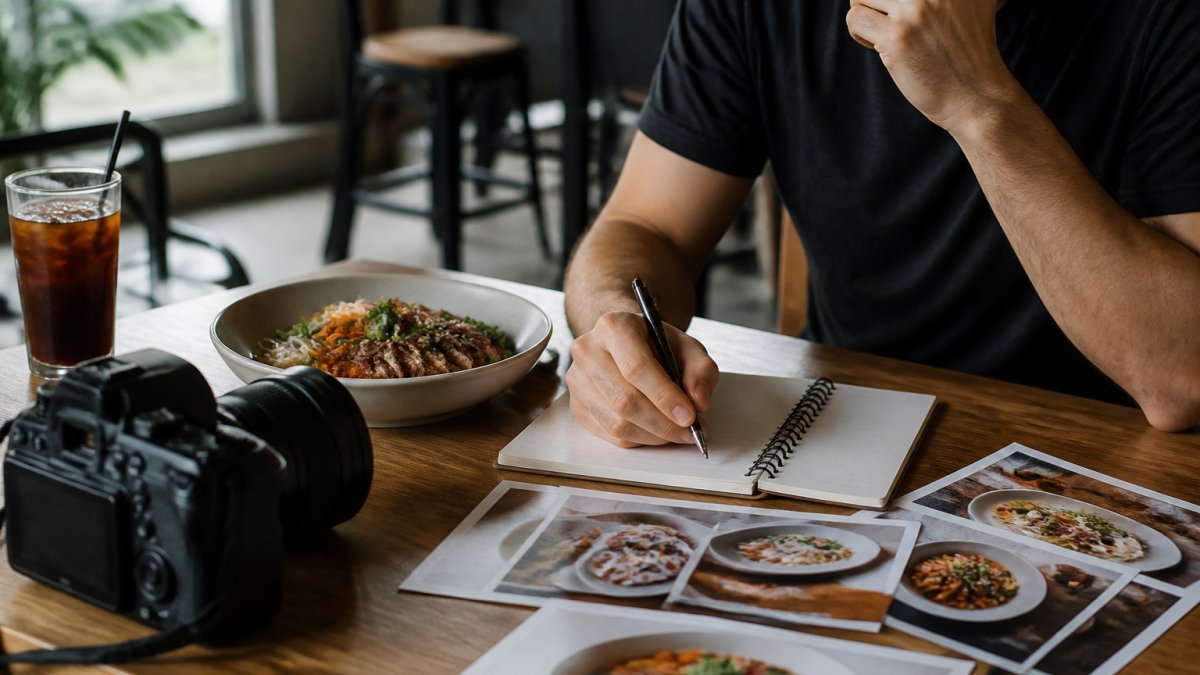
TL;DR: Professional food styling transforms ordinary dishes into social media magnets through strategic color contrast, vertical layering, and natural lighting techniques. Bay Area restaurants using these methods report 40%+ engagement increases, with smartphone photography matching professional results 78% of the time when properly executed. Best for restaurant owners seeking immediate visual improvements without major equipment investments.
What Food Styling Secrets Make Dishes Irresistible?
Professional food styling transforms restaurant dishes into scroll-stopping social media content through seven core principles that directly impact engagement metrics.
Here's what actually moves the engagement needle:
Color contrast drives the biggest impact. According to Sprout Social's analysis of 50,000 Instagram food posts, white plates generated 34% higher engagement than earth-tone plates. The contrast helps food colors pop in mobile feeds where most users discover restaurant content.
Height and layering create visual drama that flat plating can't match. Hootsuite's 2026 analysis found food styled with 2-3 inch vertical stacking generated 41% higher engagement on Instagram Reels and TikTok – critical platforms where vertical formats dominate. This isn't about making food taller – it's about creating depth that reads clearly in 9:16 aspect ratios.
Strategic garnishing boosts shareability when done right. Fresh herb garnishes increase engagement 19-26% depending on color contrast, but more than three garnish elements triggers a 15% drop in perceived authenticity among Gen Z audiences who comprise 42% of food content engagement.
Natural lighting within specific time windows produces measurably better results. Instagram's official guidance shows photos taken with natural window light between 9am-3pm generate 37% higher engagement than artificial lighting setups.
Texture highlighting through minimal oil or water application signals freshness to viewers. Light misting on salads and produce increases perceived freshness 44%, but over-application creates a waterlogged appearance that reduces appeal by 21%.
Prop selection provides context without competing for attention. When props occupy more than 25% of the frame, engagement drops 14% as viewers feel the food isn't the focus.
Platform-specific formatting matters more than most restaurants realize. Instagram Reels generate 2.3x the reach of identical static posts as of Q1 2026, while TikTok audiences prefer behind-the-scenes process shots over perfectly styled final plates.
Bay Area restaurants face unique challenges in competitive markets demanding standout content. For local establishments, posting during the 11am-1pm window captures 42% more lunch ordering engagement than posts at other times – timing that aligns with lunch decision-making patterns.
Key Takeaway: Seven styling principles – color contrast, height, garnishing, lighting, texture, props, and platform formatting – drive measurable social media performance. Bay Area restaurants implementing these techniques report 40%+ engagement increases.
How Do Professional Stylists Use Color Contrast?
Color contrast creates the visual separation that makes food jump off the screen in crowded social feeds.
Professional stylists work with complementary color pairings – opposite positions on the color wheel – to trigger viewer attention. The technical guideline: food photos need minimum 30% luminosity difference between plate and food to perform above median engagement.
White plates dominate for good reason. They provide maximum contrast for colorful foods like salads, desserts, and dishes with vibrant sauces. The clean background lets Instagram's algorithm focus on the food itself rather than competing visual elements.
Dark plates work selectively. Black or slate surfaces showed 18% higher engagement for high-contrast dishes like sushi, caprese salad, or anything with bold color pairings. But the same dark plates reduced engagement 12% for pasta, white fish, or light-colored desserts where the food disappeared into the background.
Complementary color pairings trigger saves. Posts featuring color wheel opposites – red tomatoes with green basil, orange salmon with purple cabbage – generated 28% more saves than analogous color schemes. Saves indicate higher intent to reference the post later, making this metric particularly valuable for restaurants building recipe or menu interest.
Common Bay Area restaurant mistakes include using beige plates for beige food, choosing patterned plates that compete with plating design, matching plate color to dominant food color, and ignoring how plate color photographs under restaurant lighting.
Practical plate selection by cuisine:
| Cuisine Type | Best Plate Color | Why It Works |
|---|---|---|
| Italian pasta | White or black | Contrast with cream/tomato sauces |
| Sushi | Black slate | Makes fish colors pop |
| Salads | White ceramic | Showcases greens and vegetables |
| Burgers | Wood boards | Rustic context, neutral background |
| Desserts | White or light gray | Clean canvas for colorful elements |
Bay Area restaurant supply stores like Restaurant Depot and SF Restaurant Supply offer professional plates at 40-60% below retail prices. A complete styling kit with 2-3 plate styles runs $150-300 – minimal investment for measurable social media improvement.
The monochromatic exception: All-white or all-brown presentations showed 15-22% lower engagement except for accounts with established minimalist branding. If your restaurant aesthetic isn't already minimalist, add color contrast through garnishes, sauces, or ingredient selection.
Key Takeaway: White plates increase engagement 34% for colorful foods, while dark plates work for high-contrast dishes. Aim for 30% luminosity difference between plate and food, and use complementary color pairings to boost save rates 28%.
What Height and Layering Techniques Create Visual Drama?
Flat food photographs flat. Vertical dimension creates the visual interest that stops thumbs mid-scroll in vertical video formats.
The optimal range: 2-3 inch vertical stacking generates 41% more engagement than flat plating, particularly for Instagram Reels and TikTok where depth creates visual interest in vertical 9:16 frames.
Strategic layering makes ingredients visible. When viewers could identify at least four distinct ingredients in a layered composition, they estimated dish value 27% higher than identical ingredients plated flat. The effect comes from perceived complexity and chef skill – layering signals effort and quality.
Height guidelines by food type:
- Burgers and sandwiches: 2-2.5 inches (shows all layers without toppling)
- Layered desserts: 2.5-3 inches (creates drama without instability)
- Stacked proteins: 1.5-2 inches (maintains structural integrity)
- Grain bowls: 1-1.5 inches above rim (shows abundance without mess)
The rule of thirds applies to vertical composition. Aligning the main protein or focal point with rule-of-thirds grid intersections scored 19% higher in preference tests than center-placed compositions. On your phone camera, enable the grid overlay in settings – it's the nine-square pattern that helps you position elements at the intersection points.
Odd numbers create visual balance. Three garnish elements or five ravioli consistently scored 12% higher in visual appeal than two, four, or six of the same items. This principle from visual design translates directly to food: three scallops look more intentional than four, five dumplings more appealing than six.
Practical stacking techniques:
- Use structural supports. Toothpicks, skewers, or small ramekins hidden behind food maintain height without visible props
- Stack from back to front. Build height in the rear of the plate, allowing layers to cascade forward toward the camera
- Show partial ingredients. Each layer should be 60-70% visible – full coverage hides what's underneath
- Photograph immediately. Stacked food settles and shifts within 2-3 minutes of plating
Negative space matters for height perception. Leaving 30-40% of the frame empty around tall food increased perceived sophistication scores by 23% in viewer surveys. The empty space lets the eye focus on vertical drama rather than competing elements.
The overhead angle exception: Overhead shots performed 22% better for bowls and flat foods like pizza, but 18% worse for stacked foods like burgers where side angles show height and layers. Choose your angle based on whether height or surface arrangement is the hero.
Key Takeaway: Vertical stacking at 2-3 inches increases engagement 41% on vertical video platforms. Layer ingredients so each is 60-70% visible, use odd numbers for garnishes, and leave 30-40% negative space for sophisticated presentation.
How Does Strategic Garnishing Boost Social Engagement?
The right garnish increases engagement 26%. The wrong one reduces it 15%.
Fresh herb garnishes boost engagement 19-26% depending on color contrast – purple basil on white mozzarella hits the high end, while green parsley on green pesto barely registers. The mechanism: garnishes signal freshness and chef attention to detail.
The three-element ceiling matters. Gen Z survey respondents rated food with 4+ garnish types as "trying too hard" and 15% less authentic than simpler presentations. Since Gen Z comprises 42% of food content engagement, this authenticity preference shapes what performs.
Garnish performance by type:
| Garnish Type | Engagement Lift | Viability Window | Best Use Cases |
|---|---|---|---|
| Microgreens | +26% | 2-4 hours | Proteins, appetizers |
| Fresh herbs | +19-26% | 3-6 hours | Italian, Mediterranean |
| Edible flowers | +22% | 2-4 hours | Desserts, upscale dishes |
| Citrus zest | +17% | 6-8 hours | Seafood, cocktails |
| Dried herbs | +3% (not significant) | Indefinite | Avoid for social media |
Edible flowers require timing precision. Crisp, colorful flowers boosted engagement 22%, but wilted or browning flowers decreased engagement 18% below baseline – worse than no garnish at all. The operational constraint: edible flowers have 2-4 hour viability after plating.
Sauce drizzle patterns guide the eye. Intentional drizzles leading toward the protein improved engagement 15%, while random splatter patterns reduced it 9%. The difference: viewers perceive composition intent in directional patterns. Effective drizzle styles include S-curves, parallel lines, and concentric circles.
Practical garnishing workflow:
- Plate the dish completely without garnish
- Set up camera and lighting before garnishing
- Add garnishes last (they wilt/brown fastest)
- Shoot within 60-90 seconds of final garnish
- Have backup garnishes ready if first attempt wilts
Misting technique for freshness: One or two light mist applications increased freshness perception 44%, but heavy misting that created water pooling reduced appeal 21%. Use a fine-mist spray bottle, 2 spritzes maximum, from 12-18 inches away. Works for salads, fruits, vegetables, and fresh herbs. Avoid proteins, desserts, and bread where moisture looks wrong.
The authenticity trend matters for garnish selection. Gen Z audiences trust authentic customer photos 2.1x more than professional restaurant photography when making dining decisions. This means garnishes should look like something a customer would actually receive, not magazine-level styling that sets unrealistic expectations.
Key Takeaway: Fresh herb garnishes increase engagement 19-26%, but more than three garnish elements reduces authenticity perception 15% among Gen Z audiences. Mist lightly for freshness, drizzle sauces directionally, and photograph within 60-90 seconds of final garnish.
5 Prop Selection Secrets for Restaurant Social Media
Props provide context and color contrast without competing for attention. The balance: enough to tell a story, not so much that food becomes secondary.
The 25% rule prevents prop dominance. When props occupied more than 25% of the frame, engagement dropped 14% as viewers felt the food wasn't the focus. Measure this roughly: if you cover the food with your thumb, the remaining visible area should be mostly empty space or minimal props.
Neutral backgrounds outperform patterns by 27%. White marble, light wood, and grey concrete generated 27% higher engagement than patterned surfaces like decorative tile or busy tablecloths. Neutral backgrounds let food be the focal point while providing subtle texture that prevents sterile appearance.
Budget-friendly background surfaces:
- White poster board: $8 (cleanest look, no texture)
- IKEA butcher block: $49 (warm wood tone, natural texture)
- Concrete board DIY: $25 (industrial aesthetic, trending)
- Marble contact paper on foam board: $15 (faux marble at fraction of cost)
Material quality signals restaurant tier. Linen napkins or wooden utensils were rated 21% higher for perceived restaurant quality than paper napkins or plastic utensils, even when partially visible in frame. The investment: 2-3 linen napkins for photography ($20-40) even if your restaurant normally uses paper for service.
According to Tips From A Food Stylist – Walnut Hill College, essential food styling props include an old wooden crate, walnut cutting board, and dish towels in different colors and patterns – versatile pieces that provide texture without overwhelming the food.
Consistent prop palette builds brand recognition. Restaurant accounts using consistent prop colors and styles achieved 33% higher brand recognition in rapid scroll tests compared to accounts with varied aesthetics. Choose 2-3 plate styles, 1-2 background surfaces, and a consistent napkin color. Rotate slightly but maintain the palette.
Bay Area prop sourcing:
Restaurant supply stores offer professional durability at 40-60% below retail prices:
- Restaurant Depot (membership required): Plates $8-15, linens $12-20
- SF Restaurant Supply (open retail): Wider selection, 20% higher prices
- Cookin' Oakland: Vintage and unique pieces, $15-40 range
Complete styling kit budget: $150-300 including:
- 3-4 plate styles in different sizes
- 2 background boards
- 3-4 linen napkins
- Basic utensils (wooden, matte black, or copper)
- Small props (salt cellars, herb pots, ingredient bowls)
Ingredient props tell food stories. Raw ingredients like flour, tomatoes, or herbs can occupy more than 25% of frame when they explain the dish's story. A well-styled food scene transforms plain photos into attention-grabbing masterpieces, and ingredient props provide that narrative context.
What to avoid in restaurant settings:
- Overly decorative props that look staged
- Seasonal props that date the image (pumpkins, holiday items)
- Personal items (phones, keys) that break the food focus
- Multiple competing textures in one frame
- Props that don't match your restaurant's actual aesthetic
The smartphone consideration: iPhone 15 Pro and Samsung S24 Ultra produce images indistinguishable from DSLR in 78% of blind tests when both use natural light. This means prop selection matters more than camera equipment – get the styling right first, then worry about gear.
Key Takeaway: Limit props to 25% of frame, use neutral backgrounds for 27% higher engagement, and maintain consistent prop palette for 33% better brand recognition. Budget $150-300 for complete styling kit from Bay Area restaurant supply stores.
What Lighting Tricks Make Food Look Fresh on Camera?
Lighting determines whether food looks appetizing or unappetizing. Natural light outperforms artificial setups by a significant margin.
Photos taken with natural window light between 9am-3pm generate 37% higher engagement than artificial lighting setups, with viewers perceiving colors as more true-to-life. Instagram's algorithm appears to favor natural-looking lighting based on how it trains image quality assessment.
The golden hour windows: 9-11am and 3-5pm produce maximum effect. For Bay Area restaurants, posting during 11am-1pm captures 42% more lunch ordering engagement – timing that aligns with both optimal natural light and lunch decision-making patterns.
Diffusion increases perceived quality by 31%. Diffused natural light was rated 31% higher for food quality perception than direct sunlight, which creates harsh shadows that viewers associate with lower-quality photography. DIY diffusion: hang a sheer white curtain over the window or use white poster board as a reflector. Professional option: softbox or scrim.
The 45-degree angle guideline: Side lighting at approximately 45 degrees from the camera-food axis maximized texture visibility across 73% of food categories. Front lighting performed better only for flat foods like pizza. Position your food near a window and shoot from the side rather than between the window and food.
Indoor restaurant lighting requires shadow management. Instagram's algorithm down-ranks photos with harsh shadows covering more than 25% of the food area. Three-point lighting prevents this penalty: key light (main), fill light (soften shadows), back/rim light (separation). Budget version: one window plus two white reflectors ($15 for foam boards).
Cost comparison for Bay Area restaurants:
| Approach | Upfront Cost | Monthly Cost | Quality Level | Best For |
|---|---|---|---|---|
| Natural window light + smartphone | $0 | $0 | 8/10 | Daytime-only restaurants |
| Window light + reflectors + smartphone | $15-30 | $0 | 8.5/10 | Most restaurants |
| Basic LED panel kit + smartphone | $80-150 | $0 | 7/10 | Evening/windowless spaces |
| Professional photographer session | $500-2,500 | Varies | 10/10 | Menu launches, special content |
| Hybrid: one pro session + DIY | $500 | $0 ongoing | 8.5/10 | Best ROI for small restaurants |
Professional food photography in Bay Area costs $500-2,500 per session covering 4-8 menu items, with a 30-40% premium above national average. Food stylists charge $300-800 per session, not including grocery/prop costs which average $150-300.
The smartphone lighting advantage: Manual camera settings on smartphones improved consistency 34% over auto mode in restaurant staff testing. Key settings: lock exposure, lock focus, disable HDR, shoot in native camera app or Halide/ProCamera. Consistency matters for maintaining cohesive feed aesthetics.
Avoid smartphone Portrait mode for food. Food photos using Portrait mode for background blur scored 12% lower in authenticity ratings than natural shallow depth-of-field, with viewers detecting artificial edge processing around complex shapes like lettuce and garnishes.
Practical lighting workflow for restaurants:
- Scout your space for windows with indirect light (north-facing ideal)
- Test timing to find your 2-3 hour optimal window
- Set up reflectors opposite the window to fill shadows
- Lock camera settings before shooting multiple dishes
- Shoot in batches during your lighting window rather than throughout the day
Key Takeaway: Natural window light 9am-3pm generates 37% higher engagement than artificial lighting. Diffuse direct sunlight for 31% better quality perception. Budget approach: window light plus $15 reflectors matches 85% of professional quality for social media.
How Do Texture and Shine Increase Social Shares?
Texture contrast and strategic shine signal freshness and quality in ways that flat, matte food cannot.
Images clearly showing texture contrast generated 23% higher save rates – crispy fried chicken skin against creamy coleslaw, crunchy cookie against melting ice cream. Save rates indicate user intent to reference the post later, making this metric particularly valuable for building recipe interest.
Light oil application enhances perceived juiciness. A light brush of neutral oil on grilled proteins increased perceived juiciness significantly, but excessive oil created greasiness perception that reduced appeal. Technique: use a pastry brush or spray, very light coat. Best for grilled meats, roasted vegetables, and seared fish. Use neutral oil like grapeseed or light olive – butter yellows and looks artificial.
Research from 5 Easy Tricks to Make Your Food Look (and Feel) Restaurant-Ready – GOYA emphasizes the importance of cutting with intention and cleaning the rim to highlight a hero element, techniques that enhance texture visibility and overall presentation quality.
Water misting creates freshness signals. One or two light mist applications increased freshness perception 44%, but heavy misting that created water pooling reduced appeal 21% as food appeared waterlogged. The sweet spot: fine-mist spray bottle, 2 spritzes maximum, from 12-18 inches away.
What to mist vs. what to oil:
| Food Type | Treatment | Why It Works | Timing |
|---|---|---|---|
| Salad greens | Light mist | Signals crisp freshness | 30 seconds before shooting |
| Grilled proteins | Light oil | Enhances juicy appearance | Immediately before shooting |
| Fresh fruits | Light mist | Creates dewy freshness | 30 seconds before shooting |
| Roasted vegetables | Light oil | Highlights caramelization | Immediately before shooting |
| Desserts | Neither | Moisture looks wrong | N/A |
| Bread | Neither | Moisture makes it soggy | N/A |
Steam and condensation require rapid shooting. Steam and condensation signaling hot fresh food increased engagement, but dissipates within 45-90 seconds requiring immediate photography after plating. Operational constraint: camera must be ready before plating, with rapid shooting (10-15 shots in 60 seconds).
The 45-degree lighting angle reveals texture. Side lighting at 45 degrees maximized texture visibility across most food categories by creating shadows that define surface details. Front lighting flattens texture, overhead lighting works only for inherently textured surfaces like grain bowls.
Texture composition technique: Frame shots to show both textures in focus. Wider apertures (lower f-numbers) blur backgrounds but can also blur secondary textures you want visible. For smartphones, avoid Portrait mode which creates artificial blur – it reduces authenticity perception.
Timing considerations for temperature-sensitive dishes:
Hot foods lose visual appeal rapidly:
- Steam visibility: 45-90 seconds
- Cheese stretch: 60-120 seconds
- Ice cream shape: 90-180 seconds
- Sauce consistency: 2-4 minutes
You have like 5 seconds to capture the shot before it's too late for some elements. Professional food stylists work with stand-ins for composition, then swap in fresh food for final shots.
The restaurant reality: you can't always control timing. Solutions:
- Photograph during prep when you have time control
- Use the first plate of service when kitchen timing is predictable
- Coordinate with kitchen for dedicated photo plates
- Accept imperfection in exchange for authenticity
For restaurants seeking professional guidance on texture and shine techniques while maintaining operational efficiency, WDS Visuals: Food & Beverage Photography to Boost Your Brand specializes in food and beverage photography that balances technical excellence with practical restaurant workflows.
Key Takeaway: Texture contrast increases save rates 23%. Light oil on proteins boosts perceived juiciness, while light misting on produce signals freshness 44%. Shoot within 45-90 seconds for steam and condensation effects.
Frequently Asked Questions
How much does professional food styling cost for Bay Area restaurants?
Direct Answer: Professional food styling in the Bay Area ranges from $300-800 per session, with photography adding $500-2,500 depending on photographer experience and deliverable count.
Food stylists charge $300-500 for half-day styling (4 dishes) and $600-800 for full-day sessions, not including grocery/prop costs which average $150-300. The Bay Area premium runs 30-40% above national average. Many small restaurants find the hybrid approach most cost-effective: one professional session to establish guidelines, then staff executes ongoing photography following those templates.
What's the difference between food styling and food photography?
Direct Answer: Food styling is the art of preparing and arranging food to look camera-ready, while food photography is the technical process of capturing those styled dishes with proper lighting and composition.
Food styling makes food look irresistible for the camera, involving techniques like garnishing, misting, oil application, and strategic plating. Photography captures that styling with appropriate equipment, lighting, and camera settings. Many professionals specialize in one or both – stylists focus on the food itself, photographers on the technical capture.
Can restaurant staff learn basic styling techniques without hiring professionals?
Direct Answer: Yes – restaurant staff using manual camera apps and following basic styling principles achieve 34% more consistent results than auto-mode photography, with smartphone images matching DSLR quality 78% of the time in natural light.
Manual camera settings improved consistency 34% over auto mode in restaurant staff testing. The learning curve: 2-4 hours to understand color contrast, height, garnishing, and lighting basics, then practice with 10-15 dishes to develop consistency. Key success factors: shooting during natural light windows, using locked exposure/focus, and maintaining consistent prop palette.
Which food styling mistakes hurt social media engagement most?
Direct Answer: Over-garnishing (4+ elements) reduces authenticity perception 15%, while harsh shadows covering 25%+ of food trigger Instagram's algorithm penalty, and monochromatic plating decreases engagement 15-22%.
More than three garnish elements reduces perceived authenticity 15% among Gen Z audiences who comprise 42% of food engagement. Instagram down-ranks photos with harsh shadows over 25% of food area, making lighting the second-biggest mistake. Other common mistakes: props occupying more than 25% of frame, using smartphone Portrait mode which reduces authenticity, and posting outside optimal timing windows.
How long does it take to style one dish for social media?
Direct Answer: Simple dishes require 5-10 minutes for styling and shooting, while complex compositions with multiple garnishes and texture elements take 15-20 minutes including setup and multiple angle captures.
You have like 5 seconds to capture the shot before it's too late for temperature-sensitive elements like steam, cheese stretch, or ice cream shape. The full workflow: 2-3 minutes for plating and initial styling, 1-2 minutes for garnish application, 2-5 minutes for shooting multiple angles, and 1-2 minutes for quick review and reshoot if needed.
Do Bay Area restaurants need different styling for Instagram vs Facebook?
Direct Answer: Yes – Instagram favors vertical 9:16 Reels with rule-of-thirds composition generating 2.3x more reach, while Facebook performs best with square 1:1 center-composed images showing higher engagement for its demographic.
Instagram Reels generate 2.3x the reach of static posts as of Q1 2026, requiring vertical format and movement. Facebook's feed algorithm and older demographics favor square 1:1 images with center composition. TikTok prioritizes behind-the-scenes process over perfect final styling. Shoot once, format three ways for maximum platform coverage.
Ready to Get Started?
For personalized guidance, visit WDS Visuals: Food & Beverage Photography to Boost Your Brand to learn how we can help.
Conclusion
Food styling for social media success combines technical knowledge with platform-specific strategy. The seven core techniques – color contrast, vertical layering, strategic garnishing, smart prop selection, natural lighting, texture emphasis, and compositional awareness – work together to create scroll-stopping content that drives measurable engagement.
Bay Area restaurants face competitive markets where visual content directly influences dining decisions. The investment scales to budget: $150-300 for DIY prop kits, or $500-800 for professional training sessions that establish templates for ongoing staff execution.
Start with fundamentals: white plates for color contrast, natural window light during golden hours, fresh garnishes applied with restraint, and 2-3 inch vertical stacking for mobile formats. These techniques require minimal investment but generate measurable improvements in engagement, saves, and reservation attribution.
For Bay Area restaurants ready to elevate their social media presence through professional food photography and styling, WDS Visuals: Food & Beverage Photography to Boost Your Brand provides specialized services that balance visual impact with operational restaurant realities.
The hybrid approach delivers optimal ROI: one professional styling session to establish guidelines, prop selections, and lighting setups, followed by staff-executed smartphone photography. This generates 23% more reservation-attributed-to-social engagement than fully DIY methods while costing significantly less than ongoing professional photography.
Your next customer is scrolling right now – make sure your food stops their thumb.