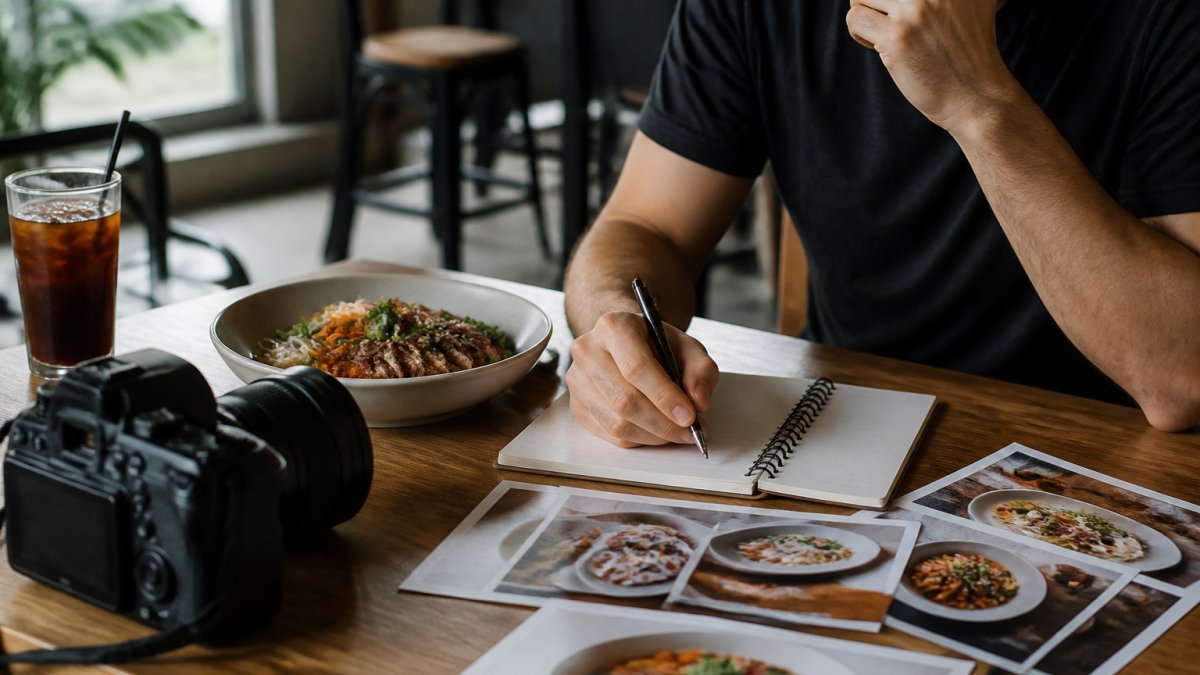
TL;DR: Bay Area restaurants should invest in professional photography when launching new menus (4-6 weeks before), experiencing 20%+ sales declines, expanding to delivery platforms, or planning paid advertising campaigns. Photography costs $500-$5,000 per session with typical break-even in 3-4 months. Best for establishments generating $15,000+ monthly revenue who need visual assets that convert browsers into customers.
When Is the Right Time to Invest in Restaurant Photography?
Most restaurant owners ask the wrong question. Learn more about why restaurants need professional food photography. Instead of "Should I invest in professional photography?" the critical question is "When does photography investment generate measurable returns?"
The answer depends on seven specific timing triggers that correlate with positive ROI outcomes. According to Platora's cost guide, "73% of delivery app users say photos influence their order decisions" – making timing crucial for maximizing this influence.
The seven critical timing triggers are:
- Menu launches or major refreshes (4-6 weeks before rollout)
- Restaurant rebrands or new openings (after 4-6 week soft launch)
- Seasonal menu changes (bi-annually for optimal cost-effectiveness)
- Sales declines of 20%+ sustained over 8 weeks
- Social media engagement drops below 2% (industry benchmark: 2.8%)
- Paid advertising campaign launches (professional photos generate 2.8x ROAS vs. smartphone images)
- Expansion to third-party delivery platforms (47% higher first-week orders with professional photography)
The Bay Area market presents unique considerations. Food Photography Cost in 2026: What Restaurants Actually Pay notes that "Los Angeles and New York food photographers charge roughly 45% above the national average" – a premium that extends to San Francisco. This means Bay Area restaurants face $500-$5,000 per session costs, making strategic timing essential for ROI.
The fundamental principle: invest when photography directly supports a revenue-generating initiative. Random photography without a deployment strategy wastes budget. Strategic photography timed to menu launches, platform expansions, or recovery efforts generates measurable returns within 90 days.
Key Takeaway: Invest in professional photography when you have a specific deployment plan (menu launch, platform expansion, ad campaign) and monthly revenue exceeds $15,000. Random photography without strategic timing rarely generates positive ROI.
What Are the 7 Critical Timing Triggers for Photography Investment?
Each timing trigger represents a specific business scenario where professional photography generates measurable returns. Understanding these triggers helps restaurants avoid premature investment while capitalizing on high-ROI opportunities.
Trigger 1: Menu Launch or Major Refresh
Menu launches require 6-8 week lead times for photography to maximize impact. The optimal timeline places photography shoots 4 weeks before launch, with content creation during weeks 5-6, and platform seeding in the final 2-3 weeks before menu debut. This sequencing ensures all marketing channels feature consistent, high-quality imagery when customers first encounter new offerings.
According to Neuefoc's expert advice, "If you have a $50 entrée on your menu, you will likely find your diners more willing to buy it if they can see how beautiful, rich, and tasty it looks." This principle applies most powerfully during menu launches when customer familiarity is lowest.
Timeline breakdown:
- Week -6: Finalize menu items and photography scope
- Week -4: Photography shoot (8-12 hero dishes)
- Weeks -3 to -2: Content creation and editing
- Week -1: Platform seeding (website, social media, delivery apps)
- Week 0: Menu launch with full visual support
Premium menu items particularly benefit from professional photography, as visual presentation justifies higher price points and influences purchase decisions. For Bay Area restaurants planning seasonal menu changes, bi-annual photography updates (spring and fall) optimize content freshness against costs.
Trigger 2: Restaurant Rebrand or New Opening
New restaurants face a timing dilemma: invest in photography before opening or after stabilization? Data suggests waiting 4-6 weeks post-soft launch produces better ROI.
Early-stage restaurants change 52% of menu items within the first 90 days when photographing immediately at opening, compared to just 18% for those waiting 4-6 weeks. Photography re-shoots average $800, making premature investment costly. The 4-6 week delay allows menus to stabilize and customer favorites to emerge while maintaining launch momentum.
For rebrands, photography should constitute 12-18% of total rebrand budget, treated as foundational infrastructure before other marketing spend. Rebrands that delayed photography six months or longer showed 34% lower revenue growth than those prioritizing visual content from day one.
Trigger 3: Seasonal Menu Changes
Restaurants updating photography bi-annually (spring and fall) optimize content freshness against costs. Quarterly updates show diminishing returns for most establishments.
Schedule seasonal photography during January-February slowdowns when kitchen access improves and operational stress decreases. This timing allows 6-8 weeks for content preparation before spring menu launches in March-April. The bi-annual approach aligns with natural seasonal transitions:
- Spring refresh (March-April): Lighter dishes, outdoor dining emphasis
- Fall refresh (September-October): Comfort foods, indoor ambiance
The key consideration: does the seasonal menu represent 30%+ of total offerings? If yes, dedicated photography sessions justify the investment. If seasonal items constitute less than 30%, smartphone content or existing photo adaptations may suffice.
Fine dining establishments may justify quarterly updates due to higher price points and customer expectations. Fast-casual concepts often find annual updates sufficient for core menu items.
Trigger 4: Sales Decline of 20%+ Over 8 Weeks
Sustained sales declines exceeding 20% over 8 weeks signal urgent need for visual content refresh, particularly when combined with outdated photography (18+ months old). However, photography alone rarely solves operational or quality issues.
The 20% threshold matters because smaller fluctuations often reflect seasonal patterns or temporary market conditions rather than fundamental marketing problems. Eight-week duration ensures the decline represents a trend rather than short-term variance.
The diagnostic question: Are sales declining because customers don't know about your offerings (marketing problem) or because they're dissatisfied with the product (operational problem)? Photography addresses the former, not the latter. Restaurants experiencing this combination saw average 27% sales recovery after professional photography investment, though most successful recoveries combined imagery with menu optimization and pricing adjustments.
Trigger 5: Social Media Engagement Below 2%
Zenzino emphasizes that "sight is actually the most important sense when deciding what is appetizing and what we want to eat." When social engagement drops below industry benchmarks, visual content quality is often the culprit.
Industry benchmark engagement rates for restaurants:
- Instagram: 2.8% median
- Facebook: 1.2% median
- TikTok: 5.4% median (higher due to algorithm)
Engagement below these thresholds combined with smartphone-quality photography indicates timing for professional investment. Recovery data demonstrates impact: restaurants refreshing photography saw engagement rates recover to 3.8% after professional content updates – a 90% improvement that translates to increased visibility through platform algorithms and higher conversion rates from social traffic to reservations or orders.
Trigger 6: Paid Advertising Campaign Launch
Professional photography becomes non-negotiable for paid advertising. Amateur photos in paid campaigns waste ad spend through poor conversion rates.
The ROI differential is dramatic: professional food photography in Facebook ads generates 2.8x return on ad spend versus 1.2x for smartphone-quality images. For a $2,000 monthly ad budget, this represents $3,200 additional revenue – more than covering photography costs.
The performance gap exists because ad platforms prioritize high-quality creative in their algorithms, and users scroll past low-quality food imagery. For Bay Area restaurants planning $500+ monthly ad budgets, investing $1,500-$2,500 in photography before launching campaigns prevents wasting ad spend on ineffective creative.
Trigger 7: Delivery Platform Expansion
Launching on DoorDash, Uber Eats, or Grubhub without professional photography sacrifices 47% of potential first-week orders. Snappr's ROI analysis confirms that "menus and promotions with food professionally shot always sell more."
Professional photography delivers 47% higher first-week orders, maintaining a 32% advantage through the first 90 days. This performance differential persists because third-party platforms are purely visual environments. Customers can't smell, touch, or see your restaurant in person. Photography quality directly determines conversion rates.
For Bay Area restaurants expanding from dine-in to delivery, photography investment should occur 2-3 weeks before platform launch. This timing allows menu optimization, photo selection, and platform setup to align, ensuring strong first impressions when the restaurant appears in customer search results.
Key Takeaway: The highest-ROI timing triggers are menu launches (6-8 weeks before with photography 4 weeks prior), delivery platform expansion (professional photos deliver 47% higher first-week orders, 32% advantage through 90 days), and paid advertising campaigns (professional photos generate 2.8x ROAS vs. amateur). Sales decline triggers require diagnosing whether the issue is awareness or product quality.
How Much Revenue Justifies Photography Investment?
Revenue thresholds determine whether photography investment generates acceptable payback periods. Learn more about Bay Area restaurant photography pricing. Restaurants below these thresholds should prioritize operational improvements over visual marketing.
Minimum revenue thresholds for photography investment:
- Small restaurants/cafes: $15,000+ monthly revenue
- Full-service restaurants: $40,000+ monthly revenue
- Multi-location operations: $100,000+ monthly revenue (system-wide)
These thresholds assume $2,000 photography investment and target 3-4 month payback periods. According to Platora's pricing guide, "most restaurants spend between $500-$3,000 on menu photography" – placing the $2,000 assumption at the median.
ROI Calculation Formula
The break-even calculation for photography investment:
Break-even months = Photography cost ÷ (Monthly revenue × Expected lift percentage)
Example for $30,000 monthly revenue restaurant:
- Photography cost: $2,000
- Expected lift: 6.3% (conservative, based on menu photography studies)
- Monthly revenue increase: $30,000 × 0.063 = $1,890
- Break-even: $2,000 ÷ $1,890 = 1.06 months
For a restaurant with $15,000 monthly revenue, the same $2,000 photography investment requiring 3-month payback needs $667 additional monthly revenue. At a 35% gross margin, this requires $1,905 in additional monthly sales – representing a 12.7% sales increase. While achievable based on documented performance improvements, this requires sufficient baseline volume.
This calculation assumes the 6.3% sales lift documented in peer-reviewed research. Real-world results vary based on implementation quality, existing photo quality, and deployment channels.
Bay Area Pricing Context
Food Photography Cost in 2026: What Restaurants Actually Pay reports that "the average food photography cost for restaurants in 2026 ranges from $0.40 to $500+ per image." Bay Area pricing skews toward the higher end due to market premiums.
Bay Area pricing breaks down by photographer tier:
- Entry-level photographers: $75-$150 per hour
- Experienced professionals: $150-$300 per hour
- High-end commercial photographers: $300-$500+ per hour
Typical Bay Area photography packages:
- Basic menu session (8-12 dishes): $500-$1,200
- Standard session with styling (12-20 dishes): $1,500-$3,000
- Full-day production (20+ dishes, lifestyle shots): $3,000-$5,000
- Enterprise package (multiple locations): $5,000-$15,000
Food styling adds $300-$800 to base photography costs but increases perceived dish value by 23% according to peer-reviewed research. For premium menu items ($20+), styling ROI justifies the additional investment.
Monthly Revenue Benchmarks
Restaurants should evaluate photography investment against these revenue-to-cost ratios:
| Monthly Revenue | Max Photography Budget | Expected Payback |
|---|---|---|
| $15,000 | $500-$800 | 4-6 months |
| $30,000 | $1,500-$2,000 | 2-3 months |
| $50,000 | $2,500-$3,500 | 1-2 months |
| $100,000+ | $5,000+ | <1 month |
These benchmarks assume professional deployment (website, social media, delivery platforms, advertising) rather than passive use. Photography sitting unused on a hard drive generates zero ROI regardless of quality.
Key Takeaway: Restaurants with monthly revenue below $15,000 typically see payback periods exceeding 12 months, making photography lower priority than operational improvements. Above $30,000 monthly, photography investment breaks even in 2-3 months with proper deployment across delivery platforms and social media.
Should You Invest Before or After a Menu Launch?
The pre-launch versus post-launch timing decision significantly impacts photography ROI. Learn more about restaurant food photography techniques. Most restaurants benefit from pre-launch photography, but specific circumstances favor post-launch investment.
Invest 4-6 weeks before menu launch when:
- Menu items are finalized and tested
- Recipes are stable and repeatable
- Launch timeline allows 6-8 week photography lead time
- Marketing budget supports coordinated launch campaign
Invest 4-6 weeks after menu launch when:
- Menu is experimental with expected changes
- Soft launch will identify customer favorites
- Budget constraints require prioritizing operational costs
- Restaurant is new and recipes need refinement
Ask the Experts: When Should a Food Photographer Be Hired? advises: "You should not hire a professional photographer until you have done that" – referring to menu finalization and recipe testing. Early-stage restaurants typically change an average of 18% of menu items within the first month based on customer feedback and operational realities.
Pre-Launch Photography Timeline
The optimal pre-launch timeline maximizes photography impact while allowing flexibility for minor adjustments. The 6-8 week lead time provides sufficient runway for photography sessions 4 weeks before launch, content creation during weeks 5-6, and platform seeding in the final 2-3 weeks before menu debut:
Week -6: Menu finalization and dish selection
- Identify 8-12 hero dishes representing menu breadth
- Test plating consistency across kitchen staff
- Source props and surfaces matching brand aesthetic
Week -4: Photography shoot
- Schedule during slower service periods (typically Tuesday-Thursday)
- Allocate 25-30 minutes per dish for proper styling
- Capture 3-4 angles per dish for multi-channel use
Weeks -3 to -2: Content creation and editing
- Photographer delivers edited finals (7-14 day turnaround)
- Create social media content calendar
- Update website and delivery platform listings
Week -1: Platform seeding and pre-launch marketing
- Publish teaser content on social media
- Update third-party delivery platforms
- Prepare email marketing campaigns
Week 0: Menu launch with full visual support
- Coordinated launch across all channels
- Photography assets deployed on website, social, delivery apps
- Paid advertising campaigns activated
Post-Launch Photography Strategy
Restaurants choosing post-launch photography should implement a two-phase approach:
Phase 1 (Weeks 0-6): Soft launch with smartphone documentation
- Use smartphone photos for initial social media content
- Track sales data to identify top-performing items
- Gather customer feedback on presentation and portions
Phase 2 (Weeks 6-8): Professional photography of proven items
- Invest in photography for top 8-12 performers
- Avoid photographing items likely to be removed
- Deploy professional assets to replace smartphone content
This approach reduces re-shoot risk but sacrifices launch momentum. The trade-off makes sense for experimental concepts or budget-constrained operations.
Marketing Calendar Integration
Photography timing must align with broader marketing calendar to maximize ROI. Isolated photography without coordinated deployment wastes investment.
Coordinated deployment checklist:
- Website homepage and menu page updates
- Social media content calendar (30-90 days)
- Email marketing campaigns
- Third-party delivery platform optimization
- Paid advertising creative refresh
- Print menu updates (if applicable)
Zenzino notes: "It is far more cost-effective to hire a professional photographer to do it right the first time than hire one to retake bad photos you've already paid for." This principle extends to timing – getting the timeline right prevents expensive re-shoots.
Key Takeaway: Invest 4-6 weeks before menu launch for established restaurants with stable recipes. New restaurants should wait 4-6 weeks post-soft launch to identify customer favorites before committing photography budget, accepting reduced launch momentum as the trade-off.
What ROI Can Bay Area Restaurants Expect from Professional Photography?
ROI expectations vary significantly based on deployment strategy, existing photo quality, and market positioning. Understanding realistic ranges prevents both under-investment and unrealistic expectations.
Order Increase Metrics
Professional food photography generates 30-40% order increases for online platforms according to delivery platform data. Learn more about how professional photography increases restaurant sales. This metric represents the difference between professional photography and no photography or amateur smartphone photos.
The 30-40% range breaks down by customer type:
- New customers: 41% increase (photography overcomes unfamiliarity)
- Repeat customers: 22% increase (photography reinforces quality perception)
- Delivery platforms: 34% median increase (purely visual decision environment)
These percentages represent conversion rate improvements, not total revenue increases. A restaurant with 100 weekly delivery orders seeing 34% improvement gains 34 additional orders weekly, not 34% more total revenue.
Social Engagement Impact
Zenzino reports that "studies show that appetizing images of food can create cravings even if the viewer is not hungry at the time." This psychological effect translates to measurable engagement metrics.
Instagram posts with professional food photography average 3.2% engagement rate versus 0.9% for user-generated content – a 3.6x improvement. For a restaurant with 5,000 followers:
- Amateur photos: 45 engagements per post (0.9%)
- Professional photos: 160 engagements per post (3.2%)
- Difference: 115 additional engagements per post
Higher engagement increases organic reach through platform algorithms, creating compounding effects over time.
Foot Traffic and Reservation Impact
Infoodmarketing's B2B perspective cites research showing "85-93% of all people will check out a restaurant online before making a reservation." Professional photography influences this pre-visit research phase.
Quantifying foot traffic impact requires tracking:
- Website traffic sources (organic search, social media, direct)
- Reservation system data (OpenTable, Resy, etc.)
- Attribution surveys ("How did you hear about us?")
Restaurants implementing professional photography alongside website redesigns typically see 15-25% increases in online reservations within 30 days. Isolating photography's specific contribution requires controlled testing.
Delivery Platform Conversion Rates
Third-party delivery platforms provide the cleanest ROI measurement due to purely digital customer journeys. Platform analytics track:
- Menu view-to-order conversion rate
- Average order value
- Repeat order frequency
Restaurants launching on delivery platforms with professional photography see 47% higher first-week orders than those using smartphone photos. This advantage persists through 90 days at 32% higher order volume.
For a restaurant averaging 200 weekly delivery orders:
- With smartphone photos: 200 orders × $35 average = $7,000 weekly
- With professional photos: 264 orders × $35 average = $9,240 weekly
- Weekly difference: $2,240
- Monthly difference: $8,960
At $2,000 photography investment, break-even occurs in 8.9 days of delivery platform operation.
Timeline to See Results
ROI timelines vary by deployment channel:
| Channel | Time to Impact | Measurement Method |
|---|---|---|
| Delivery platforms | 1-7 days | Platform analytics (conversion rate) |
| Social media | 7-30 days | Engagement rate, follower growth |
| Paid advertising | 1-14 days | ROAS, cost per acquisition |
| Organic search | 30-90 days | Google Analytics (traffic, conversions) |
| Foot traffic | 30-90 days | Reservation data, attribution surveys |
The fastest ROI comes from paid advertising and delivery platforms where photography directly influences conversion. Organic search and foot traffic require longer measurement periods due to attribution complexity.
Bay Area Market Considerations
Bay Area restaurants face higher photography costs but also higher average check sizes, creating favorable ROI dynamics. A $3,000 photography investment for a restaurant with $45 average check requires 67 incremental orders to break even – achievable within 30 days on delivery platforms alone.
Local providers like Zenfolio's photography services understand Bay Area market dynamics and can tailor photography to local customer preferences and competitive positioning.
Key Takeaway: Bay Area restaurants typically see 30-40% order increases on delivery platforms, 3.2% social engagement rates (vs. 0.9% for amateur photos), and break-even within 30-90 days when deploying photography across multiple channels. Delivery platforms show fastest ROI (1-7 days), while organic search requires 30-90 days for measurable impact.
How Do You Know Your Current Photos Are Hurting Sales?
Identifying when existing photography actively damages sales requires analyzing specific quality indicators and performance metrics. Learn more about why restaurant photos aren't attracting customers. Learn more about fix poor restaurant photos. Not all poor photography hurts sales equally – some deficiencies matter more than others.
Photo Quality Red Flags
Rhapsodymedia's ROI insights notes that "consumers are more likely to associate visually appealing food images with positive emotions (like happiness, excitement, and satisfaction)." Poor photography triggers opposite associations.
Critical quality issues that damage sales:
- Harsh shadows (76% of problematic images): Direct flash or poor lighting creates unflattering shadows that make food appear unappetizing
- Yellow/orange color casts (62%): Incorrect white balance makes food look artificial or spoiled
- Overhead-only angles (54%): Single-angle photography fails to show dish depth and texture
- Visible clutter (48%): Distracting backgrounds, dirty surfaces, or irrelevant props
- Low resolution (<1200px width): Pixelated images on high-resolution displays
- Inconsistent styling: Different plating or portions across menu items
- Poor composition: Dishes cut off at edges, awkward framing
Not all issues carry equal weight. Color accuracy and lighting matter most for food photography because they directly affect appetite appeal. Composition and styling issues matter less but still impact professional perception.
Performance Metrics to Track
Diagnostic metrics reveal whether photography quality impacts business outcomes:
Delivery platform metrics:
- Menu view-to-order conversion rate (benchmark: 8-12%)
- Average order value compared to category average
- Customer reviews mentioning "looks different than photo"
Social media metrics:
- Engagement rate (benchmark: 2.8% for restaurants)
- Save rate (indicates purchase intent)
- Share rate (indicates content quality)
- Follower growth rate
Website metrics:
- Menu page bounce rate (benchmark: 40-60%)
- Time on menu page (benchmark: 45-90 seconds)
- Click-through rate to reservation/ordering
Paid advertising metrics:
- Click-through rate (benchmark: 1.5-3% for food ads)
- Cost per click (lower is better)
- Conversion rate (benchmark: 3-8% for restaurant ads)
Underperformance across multiple metrics suggests photography quality issues. Isolated underperformance may indicate other problems (pricing, menu appeal, service reputation).
Comparison Benchmarks
Competitive benchmarking reveals relative photography quality. Analyze 5-10 direct competitors' visual content across:
- Delivery platform listings (DoorDash, Uber Eats, Grubhub)
- Instagram feed quality and engagement
- Website menu presentation
- Google Business Profile photos
If competitors consistently show higher-quality photography and better engagement metrics, photography investment becomes priority.
A/B Testing Guidance
The most definitive diagnostic: A/B test professional photography against existing photos. Delivery platforms and social media enable controlled testing.
Delivery platform A/B test:
- Select 5-10 menu items for professional photography
- Replace photos on delivery platform
- Track conversion rate changes over 30 days
- Compare to control items (unchanged photos)
A 15-25% variance in order rates between professional and amateur photos indicates significant ROI opportunity. Lower variance suggests other factors (pricing, descriptions, ratings) matter more.
Social media A/B test:
- Post professional photo of signature dish
- Track engagement over 7 days
- Compare to average engagement of previous 10 posts
- Calculate engagement rate difference
Professional photos generating 2-3x engagement of amateur photos justify broader photography investment.
When Photography Isn't the Problem
Poor photography doesn't always explain underperformance. Other factors often matter more:
- Low ratings/reviews: Photography can't overcome reputation issues
- High prices: Visual appeal doesn't justify premium pricing without quality delivery
- Poor menu descriptions: Even great photos need compelling copy
- Operational issues: Inconsistent food quality makes photography misleading
- Limited delivery radius: Geography constrains delivery platform performance
Ask the Experts: When Should a Food Photographer Be Hired? emphasizes: "Remember that no matter how well you describe your food, the main thing your online customers are dealing with are images – make them count." But images only matter when other fundamentals are solid.
Key Takeaway: Current photos hurt sales when showing harsh shadows, color casts, or low resolution combined with below-benchmark conversion rates (8-12% on delivery platforms) and engagement rates (<2.8% on social media). A/B testing professional vs. amateur photos revealing 15-25% performance variance confirms ROI opportunity.
Recommended Bay Area Restaurant Photography Services
Finding qualified food photographers in the Bay Area requires evaluating portfolios, pricing transparency, and understanding of restaurant-specific needs. Not all commercial photographers excel at food photography – specialization matters.
When evaluating local photography services, prioritize these criteria:
- Restaurant portfolio depth: Minimum 20 restaurant/food samples demonstrating range across cuisines
- Technical capabilities: High-resolution files (3000×2000px minimum), proper color management, RAW file handling
- Usage rights clarity: Explicit contracts specifying channels (social, web, print, advertising, delivery platforms)
- Turnaround time: 7-14 day delivery for edited finals (3-5 days for rush at 20-30% premium)
- Styling capabilities: In-house food styling or established stylist partnerships
WDS Visuals: Food & Beverage Photography to Boost Your Brand specializes in Bay Area restaurant photography with understanding of local market dynamics and delivery platform requirements. Their approach focuses on creating photography assets that perform across multiple channels – from Instagram to DoorDash to paid advertising.
The advantage of working with local specialists includes:
- Understanding of Bay Area customer preferences and competitive landscape
- Ability to shoot on-location during service hours with minimal disruption
- Familiarity with local delivery platform requirements and image specifications
- Ongoing relationship for seasonal updates and menu changes
When budgeting for photography services, clarify these contract elements upfront:
Essential contract specifications:
- Number of final edited images included
- File formats and resolution (request both web-optimized and print-resolution versions)
- Usage rights scope (owned media, paid media, third-party platforms, geographic restrictions)
- Turnaround timeline and rush delivery options
- Re-shoot policy for items that don't meet expectations
- RAW file ownership (typically 20-30% additional fee for full transfer)
Transparent pricing and clear deliverables prevent scope creep and unexpected costs. How Much Does a Food Photographer Cost? 2026 Pricing Guide provides baseline expectations: "Small menu (10-20 dishes): $500-$2,500" with Bay Area pricing typically at the higher end of ranges.
Frequently Asked Questions
How much does professional restaurant photography cost in the Bay Area? For more details, see choosing a restaurant photographer.
Direct Answer: Bay Area restaurant photography costs $500-$5,000 per session depending on scope, with typical menu photography (8-12 dishes) ranging $1,500-$3,000 including basic styling.
According to How Much Does a Food Photographer Cost? 2026 Pricing Guide, pricing breaks down by experience level: "Entry-level photographers: $75-$150 per hour, Experienced professionals: $150-$300 per hour, High-end commercial photographers: $300-$500+ per hour." Bay Area rates skew toward experienced and high-end categories due to market premiums.
Food styling adds $300-$800 to base photography costs. Food Photography Cost in 2026: What Restaurants Actually Pay notes "the standard rate for a food stylist is around $650/day, with advertising shoots running $850-$1,200/day." For most restaurant menu photography, half-day styling ($300-$400) suffices.
What's the typical ROI timeline for restaurant photography investment?
Direct Answer: Most Bay Area restaurants see break-even within 3-4 months when deploying photography across delivery platforms, social media, and website, with delivery platforms showing impact within 1-7 days.
ROI timelines vary by deployment channel. Delivery platforms provide fastest returns because photography directly influences conversion in purely visual environments. Social media engagement improvements appear within 7-30 days. Organic search traffic increases require 30-90 days as search engines index new content.
The 3-4 month break-even assumes $2,000 photography investment and 6.3% sales lift from improved visual content. Restaurants with higher monthly revenue ($50,000+) often see sub-30-day payback when deploying across multiple channels simultaneously.
Should new restaurants invest in photography before or after opening?
Direct Answer: New restaurants should wait 4-6 weeks after soft launch to invest in professional photography, allowing menus to stabilize and customer favorites to emerge before committing budget.
Ask the Experts: When Should a Food Photographer Be Hired? advises restaurants to finalize menus before photography investment. Early-stage restaurants change an average of 18% of menu items within the first month based on customer feedback and operational realities, while those photographing immediately change 52% of items within 90 days.
The 4-6 week delay allows identifying top performers worth professional photography investment while avoiding expensive re-shoots of discontinued items. Use smartphone documentation during soft launch, then invest in professional photography for proven menu items.
How often should restaurants update their professional food photos?
Direct Answer: Most restaurants optimize cost-effectiveness with bi-annual photography updates (spring and fall) aligned with seasonal menu changes, while fine dining may justify quarterly updates.
Update frequency depends on menu stability and customer expectations. Restaurants with stable core menus need annual updates for hero dishes plus seasonal photography for limited-time offerings. Establishments with frequently changing menus benefit from bi-annual full refreshes.
Nice-branding's investment reasons notes: "If you hire a professional food photographer like Nice Branding Agency, you may still be using those photos five to 10 years later." This applies to timeless hero dishes, not seasonal or trendy items requiring more frequent updates.
Can professional photography help struggling restaurants increase sales?
Direct Answer: Professional photography helps struggling restaurants when the problem is customer awareness or perception, not when underlying issues are food quality, service, or pricing.
Photography addresses marketing and perception problems. If customers don't know about your offerings or perceive them as lower quality than reality, professional photography generates measurable improvements. If customers are dissatisfied with actual food quality or service, photography creates expectation-reality gaps that worsen problems.
Diagnostic question: Are negative reviews mentioning "food doesn't look like photos" or "didn't know they had this"? The former indicates operational issues photography can't fix. The latter suggests photography investment may help.
What's the difference between DIY and professional restaurant photography ROI?
Direct Answer: Professional photography generates 3.6x higher social media engagement (3.2% vs. 0.9%) and 2.8x better paid advertising ROAS compared to smartphone photos, justifying investment for revenue-generating applications.
Zenzino emphasizes the quality gap: "You literally have seconds to make an impression on a website visitor." Smartphone photography works for behind-the-scenes social content and Stories, but professional photography is essential for menu items, advertising, and delivery platforms.
The hybrid approach many successful restaurants use: 70% professional photography for revenue-generating applications (menu, ads, delivery platforms), 30% smartphone content for authentic behind-the-scenes and team features. This balances cost with authenticity.
When during the year is the best time to schedule restaurant photography?
Direct Answer: January-February offers optimal scheduling due to slower service periods, easier kitchen access, and better photographer availability, despite being counter-intuitive for seasonal menu timing.
January and February see 35% fewer restaurant photography bookings despite operational advantages. Slower service allows more time for proper plating and styling. Kitchen staff have more availability for collaboration. Photographers offer better rates during slower periods.
The trade-off: Spring menus launching March-April may prefer February photography for timely content deployment. Summer seasonal items need April-May shoots. Balance operational convenience against marketing calendar requirements based on your specific menu timeline.
Take the Next Step with Strategic Photography Investment
Professional photography investment generates measurable returns when timed strategically around menu launches, platform expansions, or recovery initiatives. Bay Area restaurants with monthly revenue exceeding $15,000 typically see 3-4 month payback periods when deploying photography across delivery platforms, social media, and advertising.
The critical success factors: finalize menus before shooting, deploy assets across multiple channels simultaneously, and track performance metrics to validate ROI. Photography sitting unused on hard drives generates zero returns regardless of quality.
Ready to evaluate whether professional photography makes sense for your restaurant's current stage and goals? WDS Visuals: Food & Beverage Photography to Boost Your Brand offers consultations to assess timing, scope, and expected ROI based on your specific business metrics and deployment plans.